Centimeter Ruler (cm)
A centimeter-first ruler with the metric scale on top. Calibrate, verify with a physical reference, then read cm and mm values from your screen.
Display settings
Calibration details
Resulting density: 96.0 PPI · Not calibrated · estimate only
Verify against a physical reference. Different displays can report identical parameters; display changes cannot always be detected.
Press and drag across the ruler to measure a distance in cm and inches.
Keyboard: focus the ruler and press Enter to start at zero, then Tab to − or + to adjust.
Measuring in centimeters
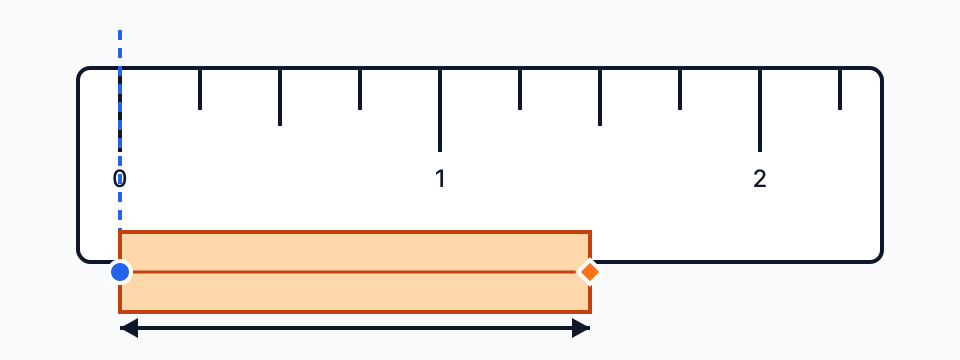
Reading cm and mm
The centimeter scale follows the metric convention: a long mark every centimeter, a medium mark at each half centimeter, short marks for millimeters. Reading is additive — the last centimeter mark passed plus the millimeter marks beyond it. Because 1 cm is exactly 10 mm, you can switch to the millimeter ruler at any time without changing the geometry.
Common centimeter references
Objects with standardized sizes make good calibration checks. Lay one against the ruler; if the reading matches the table, the calibration is sound.
| Object | Size |
|---|---|
| Bank card (ISO/IEC 7810 ID-1) | 8.56 × 5.40 cm |
| A4 sheet (ISO 216) | 21.0 × 29.7 cm |
| US Letter sheet | 21.6 × 27.9 cm |
| AA battery (IEC LR6) | 5.05 × 1.45 cm |
| CD or DVD | 12.0 cm diameter |
What centimeters are good for
Metric is the default for sewing patterns, paper and envelope sizes, furniture, packaging and most product listings outside the US. Craft and DIY dimensions between 1 and 30 cm are where a screen ruler is most practical: the object lies flat against the glass and the reading is immediate.
Converting to inches
Multiply centimeters by 0.3937 to get inches, or divide by 2.54. For woodworking and US hardware you usually want a fraction: 10 cm is 3 15/16 in. The unit converter shows the nearest 1/16 fraction, and the inch ruler guide explains how to read those marks.
How to use this ruler
- Calibrate first if the badge says “estimated” — the ruler home page explains both methods.
- Keep the cm tab selected. Numbered marks are centimeters; the short marks between them are millimeters.
- Align one edge of the object with the 0 mark, read the centimeter just before its other edge, then count the millimeter marks past it.
- Drag along the ruler for a displayed readout in cm, mm and inches; its decimals are not an accuracy guarantee.